Signs It May Be Time for Assisted Living in Princeton, WV
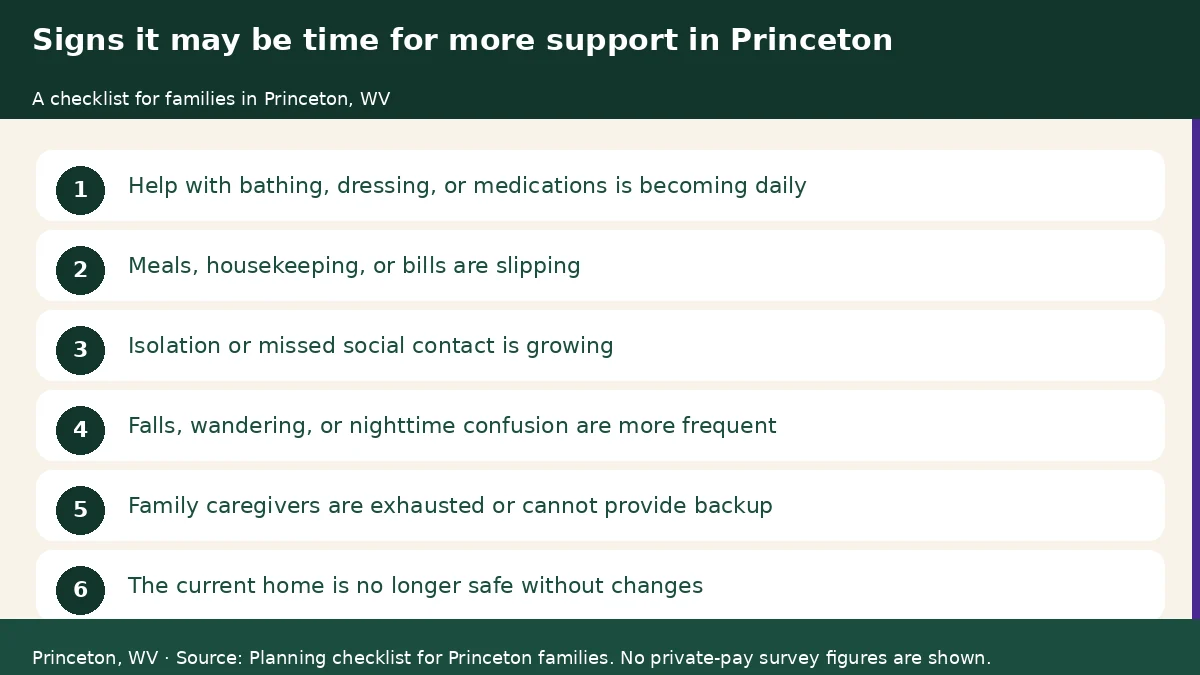
Many adult children in Princeton notice small changes in a parent long before anyone says the words "assisted living." A missed bill, a dent in the car, a refrigerator with little food in it. Each change on its own can seem minor. Together, they can mean a parent needs more help than they are getting. This guide describes the common signs, explains how to have the conversation, and points to local resources in Mercer County.
Signs in daily life
Personal care
- Wearing the same clothes for days, or dressing inappropriately for the weather
- Noticeable changes in hygiene
- Difficulty bathing safely
Meals and nutrition
- Weight loss or an empty refrigerator
- Expired food that has not been thrown away
- Skipping meals, or relying on snacks
Medications
- Missed doses or pills left in organizers
- Taking the wrong amount
- Running out early, or forgetting refills
The home
- Clutter, unopened mail, or unpaid bills
- Laundry and dishes piling up
- Yard work, snow, and home repairs falling behind
Signs of safety risks
- Falls or near falls. Bruises your parent cannot explain, or reluctance to walk.
- Driving concerns. New dents, getting lost, or close calls on the road. On the winding roads around Princeton and in winter weather, driving problems can quickly become dangerous.
- Kitchen safety. Burned pots or a stove left on.
- Wandering. Leaving home and getting lost, especially at night.
- Scams. Unusual purchases, new "friends" asking for money, or unexplained withdrawals.
If your parent may be the victim of abuse, neglect, or financial exploitation, West Virginia's Centralized Intake line takes reports 24 hours a day at 1-800-352-6513 (West Virginia Bureau for Social Services). In an emergency, call 911.
Signs of memory changes
- Repeating questions or stories
- Trouble following conversations or familiar tasks
- Confusion about time or place
- Changes in judgment or personality
Memory changes have many possible causes, some of which are treatable. A medical evaluation is an important first step. If your parent is living with dementia and safety is a concern, memory care may be a better fit than assisted living; see our guide to assisted living versus memory care in Princeton.
Signs of isolation
Isolation is a real concern in rural parts of southern West Virginia, where neighbors may live far apart and a parent may no longer drive. Watch for:
- Spending most days alone
- Giving up church, clubs, or visits with friends
- Seeming sad, withdrawn, or anxious
- Losing interest in hobbies
Assisted living offers company at meals and activities every day, which many residents find is one of its greatest benefits.
Signs in the caregiver
Sometimes the clearest sign is in the family. If you are a caregiver and you are exhausted, missing work, losing sleep, or worried all the time, that matters. Caring for a parent is an act of love, and so is recognizing when you need help.
When a hospital stay forces the question
For many Princeton families, the decision arrives suddenly, after a fall, a stroke, or a hospital stay. Discharge planners may tell you that your parent should not return home alone. If that happens, ask for time to visit options, ask whether a short rehabilitation stay is appropriate, and ask the care team to explain exactly what help your parent will need. Decisions made under pressure are harder, which is one more reason to look at options early.
Signs that home could still work, with help
Not every sign means a move is needed. If your parent mainly needs help with housekeeping, meals, or transportation, in-home help or community services may be enough for now. The key questions are whether your parent is safe when alone, whether needs are growing, and whether the people providing help can keep doing so.
How to start the conversation
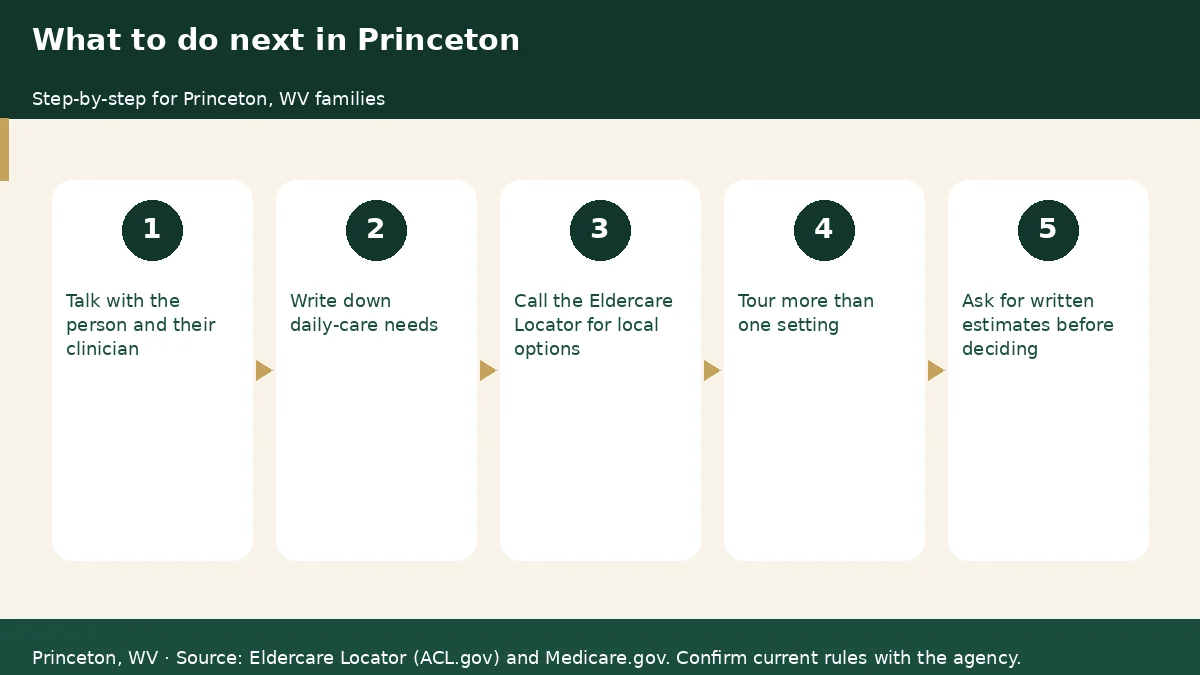
- Choose a calm time, not during a crisis.
- Start with your concern, not a decision: "I've noticed you seem tired, and I worry about you on the stairs."
- Listen. Ask what your parent wants and fears.
- Focus on what will stay the same, such as independence, privacy, and time with family.
- Visit together. Seeing a community in person often helps.
- Be patient. It may take several conversations.
Options before or besides assisted living
Not every family is ready for a move. Some start with in-home help, adult day programs, or meal delivery. The Aging and Disability Resource Center serving Mercer County, at 109 Thorn Street in Princeton, can explain local options at (304) 425-2040 (West Virginia ADRC). West Virginia's Aged and Disabled Waiver can provide in-home services for people who meet a nursing home level of care and financial rules (West Virginia ADW Program). Our article on assisted living versus in-home care costs in Princeton compares the costs.
Planning before a crisis
Many families start looking only after a fall or a hospital stay, when there is little time to compare. If you see several of the signs above, it is worth touring communities now, learning what assisted living costs, and putting powers of attorney and advance directives in place.
Keeping a simple log
A short written record can make a big difference. Each time you notice something, such as a missed medication, a fall, or a confusing phone call, note the date and what happened. Over a few weeks, patterns often become clear. A log also helps when you talk with your parent's doctor, siblings, or a community's staff, because it replaces vague worries with specific examples. Keep the tone factual and kind, since your parent may read it.
Respecting your parent's choices
An adult who can make their own decisions has the right to do so, even when family members disagree. The aim of these conversations is not to force a move, but to understand what your parent values and to find a way to keep them safe while honoring those values. If your parent is not ready, agree on what changes would prompt another conversation, and keep the door open.
Talk with GlenWood Park
GlenWood Park, at 1924 Glenwood Park Road in Princeton, offers assisted living and memory care. If you are seeing some of these signs, please call (304) 425-8128 to talk through your options and confirm current availability, or read our frequently asked questions.
Frequently asked questions
What are the first signs a parent needs assisted living?
Common early signs include missed medications, weight loss, falls, a home that is harder to keep up, and growing isolation.
How do I talk to my parent about assisted living?
Choose a calm time, start with your concerns rather than a decision, listen to your parent's wishes, and visit communities together.
Where can I report suspected elder abuse in West Virginia?
Call West Virginia's Centralized Intake line at 1-800-352-6513, available 24 hours a day. In an emergency, call 911.
What if my parent is not ready to move?
In-home care, adult day programs, and meal delivery can help in the meantime. The ADRC in Princeton can explain options.